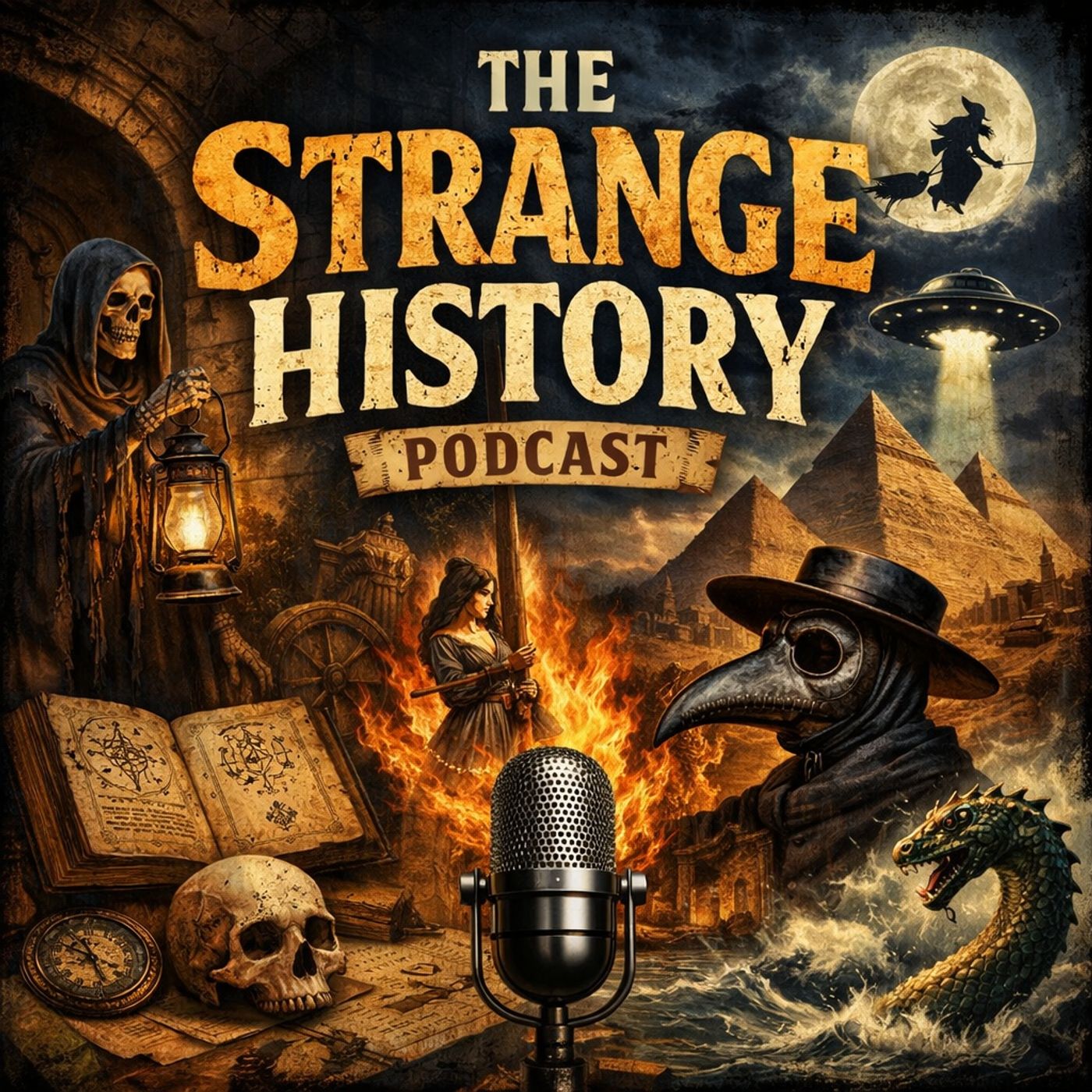
The Skull Lottery of Naples: How the Dead Helped Pick Winning Numbers
Tonight's Episode
The Skull Lottery of Naples explores one of the strangest traditions in Naples and all of Italy. In this mega episode of The Strange History Podcast, we uncover how locals visited the eerie Fontanelle Cemetery, adopted anonymous skulls, prayed to forgotten souls known as anime pezzentelle, and believed the dead could send lottery numbers through dreams. We also explore the famous La Smorfia, the centuries-old system that converts dream symbols into numbers from 1 to 90, plus true stories of lucky skulls, neighborhood interpreters, family notebooks, Church opposition, and why hope and superstition became survival tools in Naples. This is where dreams became money, skulls became advisors, and sleep became strategy.Become a supporter of this podcast: https://www.spreaker.com/podcast/the-strange-history-podcast--5773362/support.
🎧 The Strange History Podcast Love bizarre true stories, forgotten scandals, and history’s most unhinged moments?
Submit your ideas for The Strange History Podcast
Follow The Strange History Podcast wherever you listen and never miss an episode. 🔗 Listen & Subscribe:
Apple Podcasts
Spotify
iHeartRadio
Audible
New episodes regularly. History gets weird here.
Speaker 1: Dear listener. Tonight we returned to one of the strangest corners of Naples, where faith, poverty, humor, grief, superstition, and optimism once formed a partnership so unusual it could only have happened here. In many places, people go to banks for money, advice, priests for spiritual advice, and sleep for rest. In Naples for generations. Some hope to achieve all three at once by dreaming of the dead. This is the deeper story of the skull lottery of Naples, where anonymous skulls from the city's great ossuaries were believed to send dream messages that could be transformed into lottery numbers through the famous Neapolitan system known as Las Morphia.
Speaker 1: To understand how such a custom could become normal, we begin with the practical reality of Naples itself. For centuries, the city was one of Europe's largest and most crowded urban centers, rich in culture but often poor in opportunity. Lived through plague, cholera, inflation, unemployment, war, food shortages, political neglect, and the endless uncertainty that comes when ordinary people depend on systems built by distant elites. In such a world, a small amount of money could change everything.
Speaker 1: It could buy food for a week, pay overdue rent, repair a roof, cover medicine, or rescue a family from a month of panic. Hope was not a luxury. Hope was useful. That is why lotteries became so deeply woven into local life. Number betting had roots stretching back centuries, and by the eighteenth century, organized lottery systems in the Kingdom of Naples and later the Kingdom of the Two Sicilies were firmly established. Governments enjoyed taxing public hope while pretending concern over excessive gambling, a political tradition still recognizable today.
Speaker 1: By the seventeen hundreds and eighteen hundreds, discussing numbers was part of everyday conversation in taverns, markets, bakeries, barber shops, and family kitchens. People talked about likely draws, lucky sequences, unlucky signs, and strange dreams. But Naples never leaves any system plain for long. Numbers needed imagination, and imagination required translation. That is where Las Morphia enters the story. Las Morphia became a beloved symbolic guide linking dreams and daily life to numbers.
Speaker 1: From one to ninety. The name is often connected to Morpheus, the ancient god of dreams, though scholars debate the exact origin. What matters is that the system became a kind of folk encyclopedia. A priest, a wedding, laughter, tears, shoes, blood, storms, fish, nakedness, death, a child crying, a broken chair, a mother yelling from a balcony. All could correspond to numbers. In Naples, Even subconscious nonsense deserved organization. Certain numbers became famous through tradition. The dead were often associated with forty seven, fear with ninety, laughter with nineteen, marriage with sixty three, a monk with thirty three.
Speaker 1: Yet the beauty of Las Morphia was that nothing remained simple. Context mattered if the dead were smiling, angry, silent, or dancing badly in a dream. Interpretations could shift naples trusted nuance, even in superstition. Now we move underground to Fontanelle's Cemetery in the Santata district, where thousands of skulls and bones from plague victims, cholera, dead, the poor, and the forgotten were gathered inside vast, tough stone caverns. By the nineteenth century, local residents, especially women from working neighborhoods developed the custom of adopting skulls, known as capousel.
Speaker 1: They cleaned them, placed them on cloth, lit candles beside them, brought flowers, and prayed for the souls attached to those remains. These souls were often called anime pets intel, the poor little souls in purgatory who had no descendants left to pray for them. If the living offered care and prayers, the souls might respond with gratitude. They might protect children, help heal sickness, bring love, secure employment, or offer luck, and in Naples, luck often meant numbers. A person might visit fontanelle, kneel beside an adopted skull, speak quietly, ask for guidance, then return home and wait for dreams.
Speaker 1: If that night they dreamed of fish swimming through a church, a crying uncle carrying bread, three bells ringing over a staircase, or a grandmother throwing onions at the moon, the dream was not dismissed as nonsense. It was evidence. By mourning. The symbols would be converted through las morphia into playable lottery combinations to out ciders. This may sound absurd to Naples, it was simply another information system. There are many recorded anecdotes in local folklore of people claiming success after dream consultations.
Speaker 1: Some said a skull appeared smiling and repeated two numbers clearly. Others dreamed of a deceased relative standing beside their adopted skull and pointing toward a house number or church clock. Some woke in terror that they would forget the dream before sunrise, and ran half dressed to buy tickets before memory faded. Families sometimes kept notebooks recording dreams, numbers played, and whether the draw hit. If a number one, the story might be told for decades, improving slightly with every retelling.
Speaker 1: Certain skulls gained reputations as especially lucky people whispered about specific remains, known for sending clear dreams. Others were considered moody, silent, or prone to confusing symbols. If neglected, they might stop helping. If thanked properly with candles or flowers, they might become generous again. Naples has always had a gift for turning systems into personalities. There were also warnings, never mock the skull, never move it disrespectfully, Never promise candles and fail to deliver.
Speaker 1: Never ask greedily without first praying for the soul. Those who ignored such rules were said to suffer accidents, illness, bad runs of luck, broken engagements, or the far crueler punishment of missing a winning number by one digit. Neighborhood interpreters became minor authorities. Elderly women, market vendors, barbers, and local number experts were consulted with great seriousness. Someone might arrive saying they dreamed of three chickens, a priest crying, and a staircase on fire. The interpreter would pause, like a judge reviewing evidence, then assign combinations based on sequence, mood, symbolism, and instinct.
Speaker 1: Entire kitchens became symbolic think tanks, where theology, probability, and gossip worked side by side. The tradition also had a deeper psychological power. In difficult economic times, people need rituals that restore agency. You may not control wages, disease, taxes, corrupt officials, landlords, or politics. But you can remember your dream, choose your numbers, place a small wager, and believe tomorrow may change. That is not foolishness, That is survival wearing imagination. Church authorities periodically discouraged the more magical side of the practice, praying for souls aligned with Catholic devotion.
Speaker 1: Treating skulls as supernatural lottery advisors was more controversial. Over the twentieth century, reforms and changing attitudes reduced many direct customs at Fontanelle, though the folklore never disappeared. Even today, los Morphia remains alive in Naples. Newspapers, websites, apps, and everyday conversation still reference dream numbers. If something strange happens, a football miracle, a scandal, an odd dream, unusual weather, or a bizarre family argument, someone will eventually ask the only reasonable local question, what number is it?
Speaker 1: Because Naples has always understood something modern life often forgets. Human beings do not live by facts alone. We live by meaning. And now, dear listener, a quick word from tonight's sponsor.
Speaker 2: Tired of cold financial markets, tried dreamfolio investments combining symbolic poultry analysis, ancestor sentiment, and late night number intelligence. Returns not guaranteed in this dimension. Dreamfolio investments because spreadsheets never visit.
Speaker 1: You in your sleep. So the next time someone says superstition is foolish, remember Naples, where the poor turned dreams into possibility, the forgotten dead into companions, and numbers into one more way to keep hope alive until next time. Stay Curious had
Speaker 2: Had
 Apple Podcasts
 Castbox
 Castro
 Goodpods
 Moon FM
 Overcast
 Pocket Casts
 Podbean
 Podcast Addict
 Podcast Republic
 Spotify