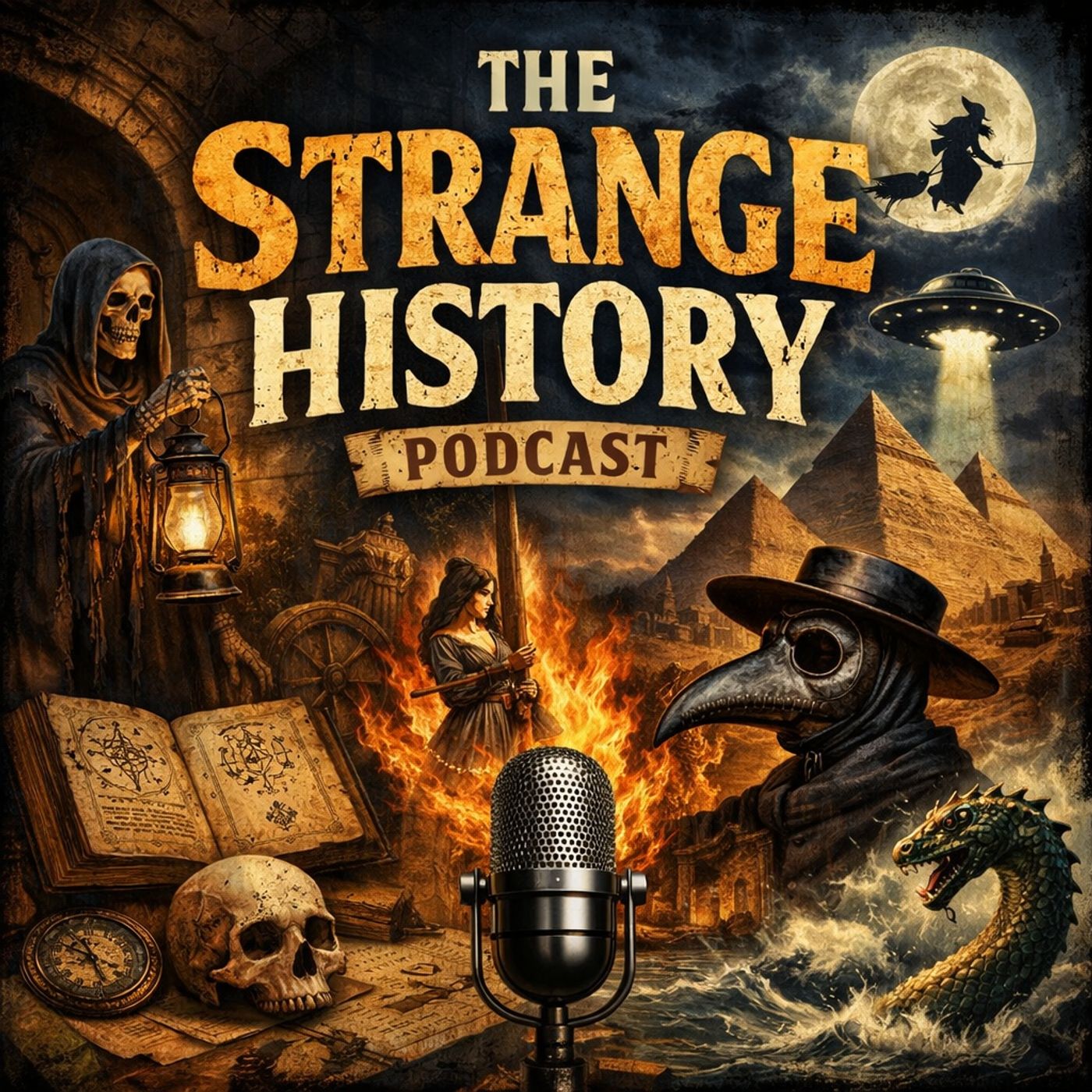
The Skull Cult of Naples: People Who Adopted the Dead and Asked for Favors
Tonight's Episode
The Skull Cult of Naples explores one of the strangest and most emotional traditions in Italy history. In Naples, locals visited the underground Fontanelle Cemetery, adopted anonymous skulls, cleaned them, decorated them, prayed for their souls, and asked for favors in return. In this mega episode of The Strange History Podcast, we uncover the real history behind the practice of anime pezzentelle, the devastating plague of 1656, the cholera outbreak of 1836, Naples’ underground burial caves, Catholic beliefs about purgatory, neighborhood women who cared for the forgotten dead, and the famous skulls said to answer prayers. We also explore the Sanità district, true accounts from visitors, Church opposition, and why this eerie tradition was really about compassion, memory, and refusing to let the poor be forgotten. This is Naples at its strangest—and most human.Become a supporter of this podcast: https://www.spreaker.com/podcast/the-strange-history-podcast--5773362/support.
🎧 The Strange History Podcast Love bizarre true stories, forgotten scandals, and history’s most unhinged moments?
Submit your ideas for The Strange History Podcast
Follow The Strange History Podcast wherever you listen and never miss an episode. 🔗 Listen & Subscribe:
Apple Podcasts
Spotify
iHeartRadio
Audible
New episodes regularly. History gets weird here.
Speaker 1: Dear listener. Tonight we return to Naples, a city that has never handled life quietly and has never handled death coldly. Naples laughs, loudly, argues, beautifully, cooks emotionally, prays intensely, and remembers in ways few places on earth can match. In many cities, the dead are placed at a respectful distance behind gates and stone walls, visited on holidays, then left in silence. In Naples, for generations, many people chose something far more intimate. They went underground, selected anonymous skulls from vast chambers of bones, cleaned them, decorated them, prayed for them, and asked those forgotten souls for help in return.
Speaker 1: It sounds impossible, eerie, and strangely tender all at once, which is exactly why it belongs to Naples. This is the story of the skull cult of Naples, centered around the remarkable Fontanelles Cemetery in the Sanota District and the devotional practice known as anime Petsentel, often translated as the poor little Souls or abandoned souls. These were believed to be spirits in purgatory, with no descendants left to prey for them, no family names, remembered, no flowers brought, no candles lit, no voice speaking their memory.
Speaker 1: In a city that values family fiercely, that kind of loneliness was considered tragic, so the living stepped in. To understand how this tradition emerged, we need to understand the physical and emotional landscape of Naples. The city sits in volcanic territory, shaped by the same geological forces that produced Mount Vesuvius and the wider, restless region known as the Campanian volcanic zone. Beneath neighborhoods lie deposits of tough, a soft volcanic stone that can be cut into blocks. For centuries, this stone was quarried to build streets, walls, churches, monasteries, staircases, and houses.
Speaker 1: As workers removed stone, they left behind huge caverns and tunnels beneath the city. These empty spaces would later become storage areas, shelters, cisterns, catacombs, and eventually places for the dead. The Santata district itself is one of the richest and most paradoxical areas of Naples. Today, it is famous for markets, street shrines, art, churches, and resilient neighborhood culture. Historically, it held aristocratic palaces, convents, burial roots, and crowded working class life. The name Sanata links to health because the valley air was once considered healthier than other parts of the city.
Speaker 1: Like many Neapolitan names, it contains optimism and irony in equal measure. Then disaster arrived repeatedly. Naples has suffered plague, cholera, famine, earthquakes, war, overcrowding, and grinding poverty across centuries. One of the most devastating moments came during the plague of sixteen fifty six, when a catastrophic epidemic swept through the city and kingdom. Estimates differ, but the death toll was staggering. Entire households vanished, commerce collapsed, priests died administering rites.
Speaker 1: Streets became scenes of fear and silence, interrupted by carts carrying bodies. Burial systems could not keep pace, churches overflowed, cemeteries filled. Emergency solutions became necessary, and the large caves at Fontanelle became repositories for remains, especially those of the poor and unclaimed. Nearly two centuries later, cholera struck again. In eighteen thirty six, adding more dead to the ostuary. By then Fontanelle contained the bones of thousands upon thousands of people. Some were plague victims, some were cholera victims.
Speaker 1: Some came from older cemeteries moved during urban works. Some were paupers buried without ceremony. Some were people whose names disappeared simply because history is selective and cruel, and Naples does not forgive cruelty easily. By the nineteenth century, popular devotion transformed the space. Ordinary residents, especially women of the surrounding neighborhoods, began visiting the ostuary not merely to mourn, but to adopt individual remains. A person might choose a skull that seemed to call to them emotionally or spiritually.
Speaker 1: The skull would be dusted, washed, placed carefully on a cloth, sometimes elevated on a little stand, and surrounded with candles, rosaries, flowers, lace framed holy cards, or handwritten notes. Tiny shrines formed among mountains of bone. The adopted skull was often called a cappazella, a little head. Once chosen, it entered a relationship of reciprocity. The living person prayed for the soul's release from purgatory, asking god to show mercy. In return, the soul might offer assistance from the other side.
Speaker 1: Help could mean healing a sick child, guiding a son home, safely finding employment, bringing luck in business, helping with fertility, repairing love, or sending useful dream numbers for the lottery. Naples has always known spirituality can coexist comfortably with practicality. Many devotees claimed the souls communicated through dreams. A woman might say the skull belonged to a sailor drowned at sea, a young mother lost in childbirth, a soldier killed in battle, a widow, a baker, or a girl who died before marriage.
Speaker 1: Whether these identities were visionary, symbolic, imagined, or sincerely, believed, something meaningful was happening. Nameless remains were being returned to personhood. The forgotten became specific again. There were also famous skulls with reputations. One, known popularly as the Captain, was believed to belong to a military officer and was sought for courage, discipline, or protection. Another was associated with a bride and appealed to by those seeking romance or marriage. Some visitors preferred skulls that looked calm, others sought.
Speaker 1: Those considered powerful human beings are wonderfully consistent. Even in an ostuary, we create favorites. Eyewitness accounts from the late nineteenth and early twentieth centuries described Fontinelle as a place both solemn and active. Women knelt in prayer beside carefully arranged skulls. Candles flickered in damp air. Visitors whispered requests. Tokens of gratitude were left after answered prayers. Some skulls wore veils or rested on embroidered cloth. Others remained simple and bare, waiting perhaps for attention.
Speaker 1: Travelers often entered expecting horror and left describing tenderness. The wider religious framework matters greatly. Catholic belief in purgatory held that souls not damned yet not fully purified, could benefit from the prayers of the living. Across Southern Italy, devotion to the dead has deep roots, but naples personalized it dramatically. Instead of praying for an abstract, unknown soul, one prayed for this skull, this person, this forgotten neighbor from another century. Some scholars argue the tradition also offered dignity and agency to poor Neapolitans, especially women, who had little formal power.
Speaker 1: Through care of the dead, they created sacred relationships outside elite institutions. No wealth was required, no noble title, no access to bishops or ministers. A candle, a cloth, patience, prayer, and attention were enough to build meaning. Church authorities, however, sometimes viewed the practice uneasily. There is a fine line between devotion for souls and treating skulls as personal supernatural service providers. During the twentieth century, ecclesiastical authorities periodically restricted or discouraged the cult, particularly where superstition overshadowed doctrine.
Speaker 1: Access to Fontanelle was reorganized. At times, shrines were cleared or standardized, and the practice became less publicly central. Yet traditions do not vanish because officials prefer tidy or theology. Even today, the memory of anime peasantel remains powerful in Neapolitan identity. Visitors to Fontanelle's cemetery walked through immense chambers lined with bones and skulls arranged in rows, stacks, alcoves, and memorial displays. Space can feel eerie, yes, but the dominant sensation for many is not fear.
Speaker 1: It is scale, humanity, and the uncomfortable realization that anonymous death is always one generation away unless someone chooses remembrance. That may be why this story resonates so strongly. The skull cult of Naples was never really about magic skulls. It was about loneliness. It was about the fear of being forgotten. It was about communities insisting that even the poor, the nameless, and the abandoned deserved candles, names, visitors, and hope. Only Naples could turn an ostuary into an act of mercy.
Speaker 1: And Now, dear listener, a quick word from tonight's sponsor.
Speaker 2: Feeling overlooked by history, try Neighborhood Legacy Partners, pairing today's lonely shelves with tomorrow's devoted caretakers. Packages include candle placement, light dusting, and premium remembrance options for those wanting a stronger p Shuman's brand present Neighborhood Legacy Partners because everyone deserves visitors.
Speaker 1: So the next time someone says cities are made only of roads and buildings, remember Naples, where beneath the streets, ordinary people built a second world out of compassion, prayer, bones, and the stubborn refusal to let strangers vanish unnoticed until next time. Stay curious,
 Apple Podcasts
 Castbox
 Castro
 Goodpods
 Moon FM
 Overcast
 Pocket Casts
 Podbean
 Podcast Addict
 Podcast Republic
 Spotify